Introduction: Finding the Strategic Balance in 2026’s Global Supply Chain
In 2026, the competitive edge in the electronics market has shifted from “feature stacking” to “agile response.” Whether you are developing a next-generation GaN charger or a Matter 1.5 smart control panel, the first critical decision a brand owner faces is: which manufacturing model should we use?
OEM (Original Equipment Manufacturing) and ODM (Original Design Manufacturing) are the two pillars of electronics production. Understanding their core differences—and aligning them with your R&D capabilities and market positioning—is the key to maximizing margins and ensuring supply chain stability in 2026.
1. Deconstructing the Concepts: Who Owns the Blueprint?
OEM (Original Equipment Manufacturer)
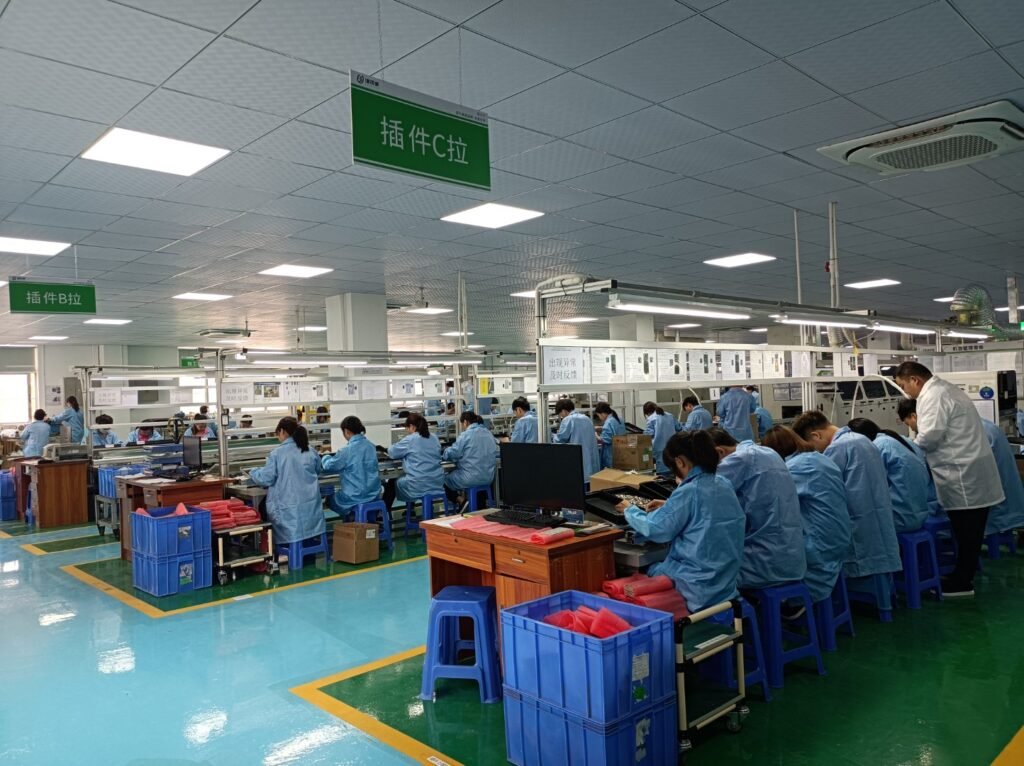
- The Model: “You design, I build.” The brand owner is responsible for R&D, Industrial Design (ID), and Schematics (PCB). The factory is solely responsible for material sourcing, assembly, and Quality Control (QC).
- Analogy: It’s like going to a restaurant with your own ingredients and a secret family recipe; the chef simply provides the kitchen and the labor to cook it exactly as instructed.
ODM (Original Design Manufacturer)
- The Model: “I design, you brand.” The manufacturer owns the mature product designs (either “public molds” or “private house molds”). The brand owner selects a model, requests minor cosmetic tweaks, and applies their logo.
- Analogy: It’s like ordering a pre-set dish from a menu; you might ask for “no onions,” but the core recipe belongs to the restaurant.
2. Deep Dive: Pros and Cons for Brands in 2026
R&D Investment and Intellectual Property (IP)
- OEM: The brand owner retains 100% of the IP. While R&D cycles are longer and more expensive, it ensures product uniqueness and long-term technical barriers.
- ODM: IP typically remains with the manufacturer. While the brand saves millions in R&D costs, “look-alike” competitors using the same base design may appear on the market.
Time-to-Market (TTM)
- OEM: Usually requires 6 to 12 months (due to prototyping, tooling corrections, and rigorous certification).
- ODM: In the highly synchronized environment of 2026, the ODM model can achieve mass production in as little as 4 to 8 weeks, making it the top choice for capturing seasonal trends like Black Friday.
Cost Control and Minimum Order Quantity (MOQ)
- OEM: Requires custom tooling and dedicated production lines, meaning MOQs are high (e.g., 5k–10k units).
- ODM: Since the factory uses existing, validated designs, brands can enjoy much lower MOQs (e.g., 1k units or even less), significantly reducing inventory risk.
3. 2026 Manufacturing Model Comparison Table
| Dimension | OEM Model | ODM Model |
| Primary Strength | Extreme Differentiation & Control | Low Entry Cost & Speed to Market |
| Technical Barrier | Brand needs a deep engineering team | Brand focuses on marketing & sales |
| Tooling Ownership | Owned by the Brand | Owned by the Factory |
| Best For… | Established brands / Disruptive tech | Startups / Trending e-commerce items |
| Supply Chain Transparency | High (Brand selects Tier-2 suppliers) | Low (One-stop management by factory) |
4. Decision Model: How to Choose the Right Path?
In the complex market landscape of 2026, evaluate your choice based on these three dimensions:
Does your product have a “Moat”?
If you are developing a product with a proprietary fast-charging protocol or a patented sensor integrated into a control panel, OEM is the only choice. This protects your core IP and prevents technology leakage.
Where is your core competency?
- If your strength is Technical Innovation: Choose OEM.
- If your strength is Traffic & Social Media Marketing (e.g., TikTok/Facebook): Choose ODM. Leverage mature solutions to get products on shelves quickly and focus your energy on customer acquisition.
Budget and Risk Tolerance
OEM involves high Tooling Fees and a long ROI period. In 2026, many brands are opting for “JDM” (Joint Design Manufacturing)—a hybrid where both parties invest in R&D to share risks and rewards.
5. New Trends in 2026 Manufacturing
The rise of AI-driven automation and Distributed Manufacturing is transforming these models:
- Digital Twins: Whether OEM or ODM, brands can now use digital twin technology to monitor overseas production lines, yield rates, and material progress in real-time.
- Sustainability Compliance: 2026 buyers (especially in the EU) demand carbon footprint reports. Brands must now vet their partners for green energy usage and recyclable material sourcing.
- Modular ODM 2.0: High-end ODMs now offer “Modular Customization,” allowing brands to mix and match features (e.g., selecting specific GaN chip specs + a Matter protocol module) to achieve semi-customization at a low cost.
Conclusion
OEM or ODM? There is no “perfect” answer—only the optimal fit for your current stage and strategy.
In 2026, successful electronics brands often adopt a “dual-track” strategy: using OEM for flagship products to establish industry leadership, and ODM for peripheral accessories or market testing to respond swiftly to global fluctuations.